
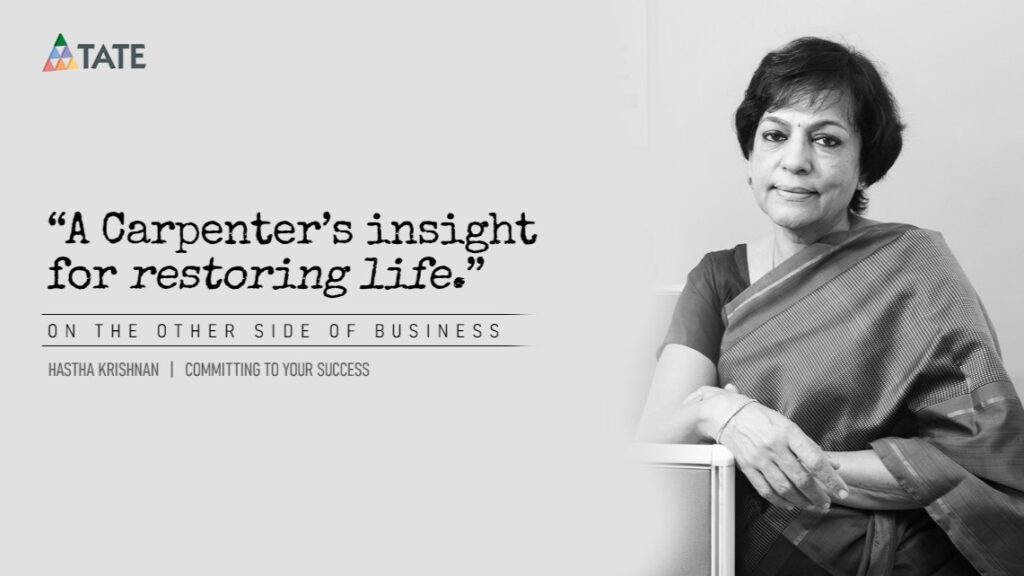
Nature does not hurry, yet everything is accomplished.”— Lao Tzu
Every morning in a quiet Bangalore lane, sixty‑eight‑year‑old Raghavan would lift the shutters of his humble workshop. Teak dust in the air, chisels lined neatly, and rows of antique pieces waiting their turn – this was his universe. For four decades, he had restored furniture that carried memories: rosewood cradles, old village almirahs, broken dining tables. People trusted him not just for craft, but for care. “Raghavan doesn’t fix furniture,” neighbours would say. “He restores lives hidden inside them.”
One afternoon, Rajiv walked in. Fifty‑five years old and a senior corporate leader, he carried the restlessness of someone constantly pursued by deadlines. He placed a wobbly rosewood chair on the bench. “It is my grandfather’s,” he said. “I need it fixed fast; two days maximum. I’ll pay whatever you ask for. We have a family reunion and this chair is very important”
Raghavan ran his hand over the loose joints and replied gently: “This chair has lived a long life. If I patch it quickly, it will stand…but not for long. To truly restore it, I must dismantle, treat, and rebuild. That would take a week; maybe more.”
Rajiv shook his head, already glancing at his buzzing phone. “I can’t wait.” Smiling softly, Raghavan handed him a plain old stool. “Take this in the meantime. See how it feels.”
Time, Measured Differently!
That week, Rajiv sat on the simple stool every evening. At first, it felt unimpressive compared to his sleek furniture. But slowly, he began noticing something unusual. During his endless business calls, minutes dragged. But when his daughter arrived with a bowl of homemade payasam, those same minutes disappeared in a heartbeat. He realised the stool wasn’t flawed – it was showing him how time bends with our attention. In corporate life, every hour felt the same. On the stool, moments felt alive, uneven, human.
The Restoration of life
On the seventh day, Rajiv returned to find the rosewood chair fully restored; steady, polished, almost glowing. “This is beautiful,” he admitted. Raghavan nodded. “Chairs, like people, don’t respond well to haste. If you rush the repair, the cracks deepen. If you give care and time, they endure. Your corporate life is no different I presume.”
Rajiv studied the stool he was about to return. “It made time feel irregular – long when wasted, short when cherished.” Raghavan smiled knowingly. “There are two kinds of time: one the calendar measures, the other your presence measures. Executives like you master the first while starving the second.”
“How much do I owe you?” Rajiv asked quietly. “For carpentry, some rupees. For the lesson, you owe nothing! That you must repay with how you live.”
Months later, Rajiv returned again, this time smiling. The stool still at his side. “I couldn’t return it,” he said. “It became a reminder on my leadership journey.” “What changed?” Raghavan asked with curiosity.
Rajiv explained: “I still head my enterprise. But I changed how I lead. I no longer chase every hour. Now I anchor my calendar on three things: time for strategy, time for teams, and time for self. I block space to mentor younger managers. I carry the stool into some workshops – it starts conversations on presence. My board noticed the change too: decisions are sharper because I’m calmer. My people feel less rushed, more trusted. And the business? It’s performing better, not worse.”
Raghavan smiled. “That stool reminded you not to escape your role – but to restore how you live it. Real leaders don’t abandon responsibility; they reshape it with presence.”
That winter, after Raghavan passed away, Rajiv found a note tucked into the old stool: “Chairs carry weight. Leaders carry more. Fix them both with patience. The craft of repair matters less than the art of restoration.” Today, if you pass that Bangalore lane, you’ll find Raghavan’s workshop open under new care. A modest signboard says: “We don’t just restore furniture. We remind people how to sit with life.”
Inside rests the rosewood chair, strong and proud – beside a simple stool that still teaches the value of presence. The metaphors from Raghavan’s workshop speak directly to today’s executives:
Quick Fixes Don’t Work
Like unstable joints, rushed corporate patches crumble. Strong solutions need depth: unearthing root causes, treating culture, and giving time to settle.
There Are Two Kinds of Time
Calendars measure hours. Presence measures meaning. Executives often manage the first, but fulfillment comes from the second.
Restoration Over Speed
Sustainable results come not from constant pressure but from thoughtful restoration – whether of teams, strategy, or self.
Legacy in Leadership
Perhaps the later stages of leadership aren’t about scaling further, but restoring what matters—values, people, communities.
At some point, growth begins to mean not doing more, but doing differently. Senior executives can choose to be restorers – of lives, of energy, of values – while continuing to lead high-performing enterprises. Because in the end, the true furniture of leadership is not the empires we build, but the lives we strengthen. The chair held by joints is only as strong as the leader held by presence.